
Introduction
Industrial floors are subjected to heavy machinery, chemical exposure, moisture, and environmental stress, making durability and protection essential. One of the most critical aspects of floor longevity and safety is waterproofing. Uncontrolled moisture can lead to structural damage, surface degradation, mold growth, and operational inefficiencies.
Proper waterproofing ensures that floors remain durable, safe, and functional, even under challenging conditions. This article explores industrial floor waterproofing methods, materials, best practices, and the benefits of professional installation, highlighting why expert solutions are vital for long-lasting industrial floors.
Why Waterproofing Matters in Industrial Floors
Industrial floors face constant exposure to water, chemicals, and environmental humidity. Without effective waterproofing:
- Concrete may absorb moisture, leading to cracks, efflorescence, and structural weakening
- Epoxy, polyurethane, and other coatings may fail prematurely
- Machinery may be affected by damp or uneven surfaces
- Slippery floors may increase workplace accidents
- Maintenance costs rise due to frequent repairs and downtime
Professional waterproofing safeguards industrial floors, ensuring long-term performance, structural integrity, and safety compliance.
Common Causes of Moisture Damage
- Groundwater Infiltration – High water tables can lead to moisture migration through slabs.
- Surface Water Penetration – Spills, washing, or rain can seep into poorly sealed floors.
- Chemical Spills – Water-soluble chemicals can degrade concrete surfaces.
- Humidity and Condensation – Indoor industrial environments with poor ventilation can accumulate moisture.
Addressing these issues requires comprehensive waterproofing solutions integrated into both the construction and maintenance phases.
Waterproofing Methods for Industrial Floors
1. Liquid Applied Membranes
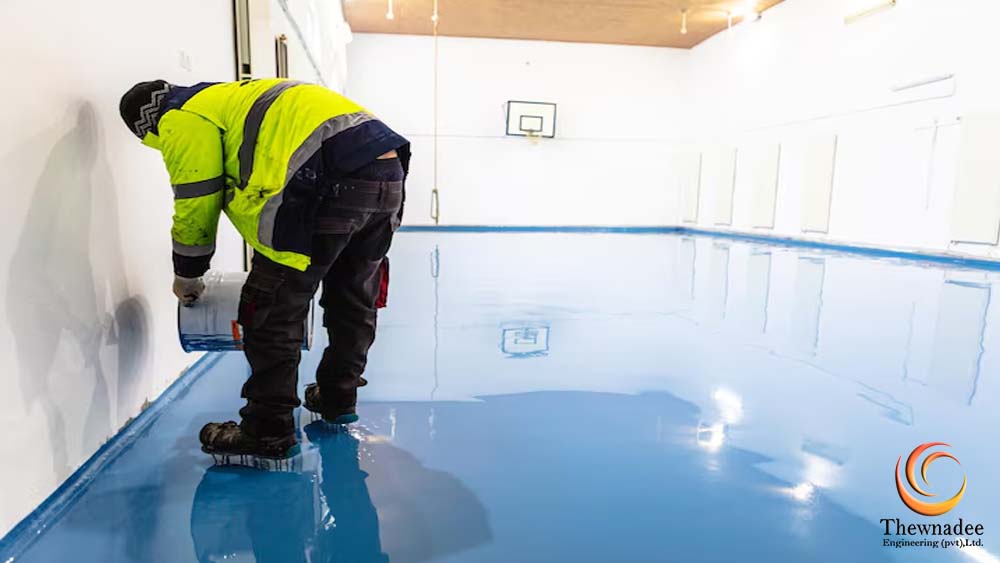
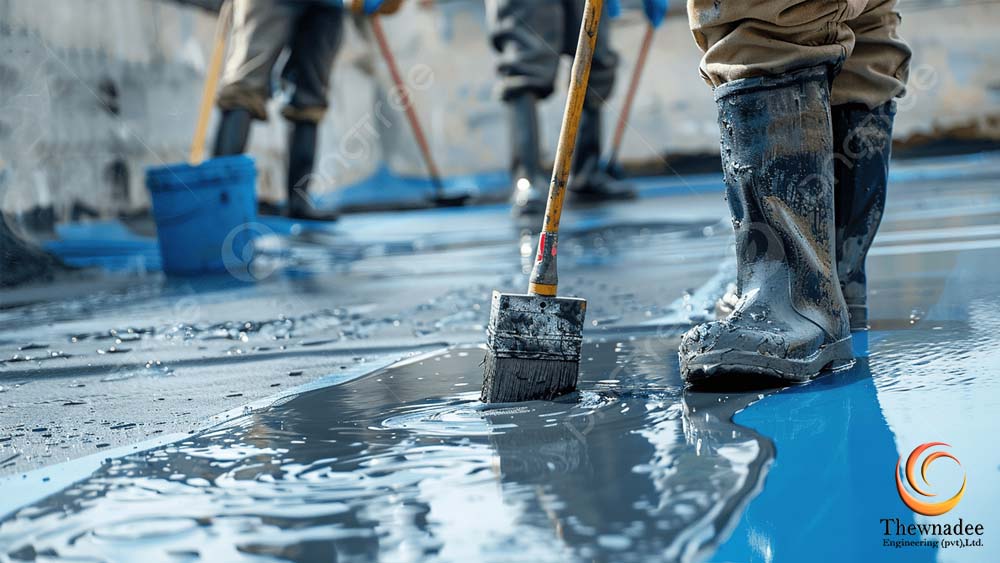
Overview: Liquid membranes are applied as coatings over concrete surfaces, creating a seamless, flexible, and durable barrier against water.
Materials Used:
- Polyurethane
- Acrylic
- Epoxy-based liquids
Advantages:
- Seamless coverage prevents water seepage
- Flexibility accommodates floor movement
- Suitable for complex floor geometries
Applications:
- Warehouses
- Production areas
- Laboratories and chemical zones
2. Sheet Membranes
Overview: Prefabricated waterproof sheets are installed under or over concrete slabs to prevent moisture penetration.
Materials Used:
- PVC (Polyvinyl Chloride) sheets
- Bituminous membranes
- HDPE (High-Density Polyethylene) sheets
Advantages:
- Highly durable and resistant to punctures
- Suitable for large industrial floors
- Provides a physical barrier against water and chemicals
Applications:
- Basements and underground industrial floors
- Areas with high water tables
- Warehouses requiring additional moisture protection
3. Integral Waterproofing Compounds
Overview: These compounds are added to concrete during mixing, making the slab itself resistant to water penetration.
Materials Used:
- Crystalline waterproofing admixtures
- Hydrophobic agents
Advantages:
- Permanently incorporated into the concrete
- Reduces reliance on surface coatings
- Resistant to chemical attacks and corrosion
Applications:
- Heavy-duty industrial floors
- Chemical storage and processing areas
- Warehouses and logistics centers
4. Cementitious Waterproofing
Overview: A combination of cement, polymers, and additives is applied as a coating to protect concrete from moisture.
Advantages:
- Strong adhesion to concrete
- Easy application for both new and existing floors
- Cost-effective and reliable
Applications:
- Factories and industrial workshops
- Food processing and cold storage areas
- Floors exposed to moisture or occasional chemical contact
Best Practices for Industrial Floor Waterproofing
1. Proper Surface Preparation
- Clean and repair cracks, spalling, and uneven surfaces
- Ensure proper moisture content and curing before application
- Smooth surface promotes adhesion of waterproofing materials
2. Choosing the Right Material
- Assess floor usage, chemical exposure, and environmental conditions
- Select materials that match operational requirements, e.g., chemical-resistant epoxy for production floors
3. Professional Application Techniques
- Follow manufacturer guidelines for thickness, curing, and multiple coats
- Use high-quality tools and machinery to ensure uniform coverage
- Inspect for gaps, pinholes, or weak spots
4. Joint Treatment
- Expansion and control joints must be properly sealed with flexible waterproofing compounds
- Prevents water ingress at weak points and enhances overall floor durability
5. Quality Control and Testing
- Conduct moisture and adhesion tests before commissioning
- Ensure consistent performance across the entire floor area
- Periodic inspection and maintenance after installation
Benefits of Professional Waterproofing
- Enhanced Durability: Floors resist cracking, chemical attack, and water penetration.
- Safety Compliance: Reduces slip hazards, mold growth, and structural failures.
- Cost Savings: Minimizes maintenance, repairs, and operational downtime.
- Extended Lifespan: Properly waterproofed floors last decades without degradation.
- Optimized Operational Efficiency: Supports heavy machinery and industrial processes without interruption.
Industrial Applications
- Manufacturing Plants: Protect floors from chemical spills and machinery fluids.
- Warehouses and Logistics Hubs: Maintain dry, safe floors for forklifts and storage racks.
- Food and Beverage Facilities: Prevent contamination and maintain hygienic floors.
- Cold Storage and Refrigeration: Manage condensation and moisture accumulation.
- Chemical and Pharmaceutical Plants: Resist chemical corrosion and ensure operational safety.
Case Example: Chemical Manufacturing Facility
A chemical manufacturing facility in Sri Lanka faced frequent floor degradation due to spills and high moisture. Professional waterproofing involved:
- Surface preparation and crack repair
- Application of chemical-resistant epoxy membrane
- Sealing of expansion and control joints
- Quality testing for adhesion and moisture resistance
The outcome was durable, safe, and long-lasting floors, capable of withstanding heavy industrial operations, chemical exposure, and high foot traffic for years.
Conclusion
Waterproofing is a critical component of industrial flooring, ensuring structural integrity, safety, and operational efficiency. By using liquid membranes, sheet membranes, integral compounds, or cementitious coatings, industrial floors can withstand moisture, chemicals, and heavy loads.
Professional solutions, like those provided by Thewnadee Engineering (Pvt) Ltd, ensure that:
- Floors are protected against water, chemicals, and wear
- Installation follows industry best practices for maximum performance
- Maintenance costs are minimized, and operational efficiency is maximized
Investing in professional waterproofing is not only about floor protection—it is a strategic decision for durability, safety, and cost-effective facility management.