

Location: Ratnapura, Sri Lanka
Client: Private Manufacturing & Processing Plant
Project Type: Industrial Flooring – Concrete Layering & Power Troweling
Services Provided: Concrete Layering, Power Troweling, Surface Preparation, Chemical Hardening
Project Background
The client, a rapidly growing manufacturing company in Ratnapura, required a flooring solution for a major factory expansion. The expansion included production lines, heavy machinery zones, and storage areas, which demanded a robust, smooth, and durable concrete floor.
The primary objectives were:
- High-strength, flat, and durable flooring suitable for industrial machinery and storage loads
- Smooth surface finish for forklifts, trolleys, and worker movement
- Dust-free and low-maintenance floors for operational efficiency
- Long-term durability and resistance to wear, moisture, and chemical exposure
Thewnadee Engineering (Pvt) Ltd was commissioned to deliver a professional concrete flooring solution, combining thick concrete layering with precision power troweling to meet the client’s operational and structural requirements.
Challenges Faced
Several challenges were identified during the initial assessment:
- Existing Floor Integration
- The new expansion needed to blend seamlessly with the existing factory floor to maintain operational efficiency and levelness.
- Heavy Machinery Load
- The factory floor would accommodate high-capacity machinery, forklifts, and storage racks, necessitating high compressive strength.
- Uneven Substrate
- Parts of the foundation were irregular or uneven, requiring careful leveling before concrete layering.
- Moisture and Dust Control
- Proper curing and dust control were essential to prevent surface cracking and dusting, ensuring long-term durability.
- Time-Sensitive Schedule
- The client required minimal downtime, so the flooring had to be completed efficiently without compromising quality.
Engineering Solution
Thewnadee Engineering implemented a multi-step concrete layering and finishing solution to address the challenges:
Step 1: Surface Preparation
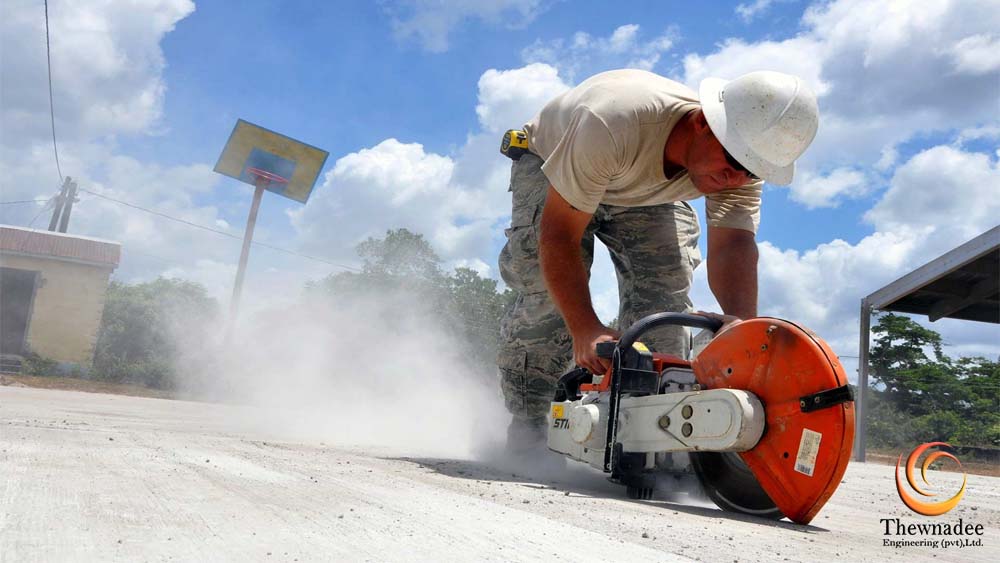
- The existing floor and foundation were thoroughly cleaned, removing debris, dust, and any contaminants.
- Minor repairs and leveling were conducted to create a smooth and uniform substrate for new concrete layers.
- Moisture levels were checked and controlled to ensure optimal bonding and curing.
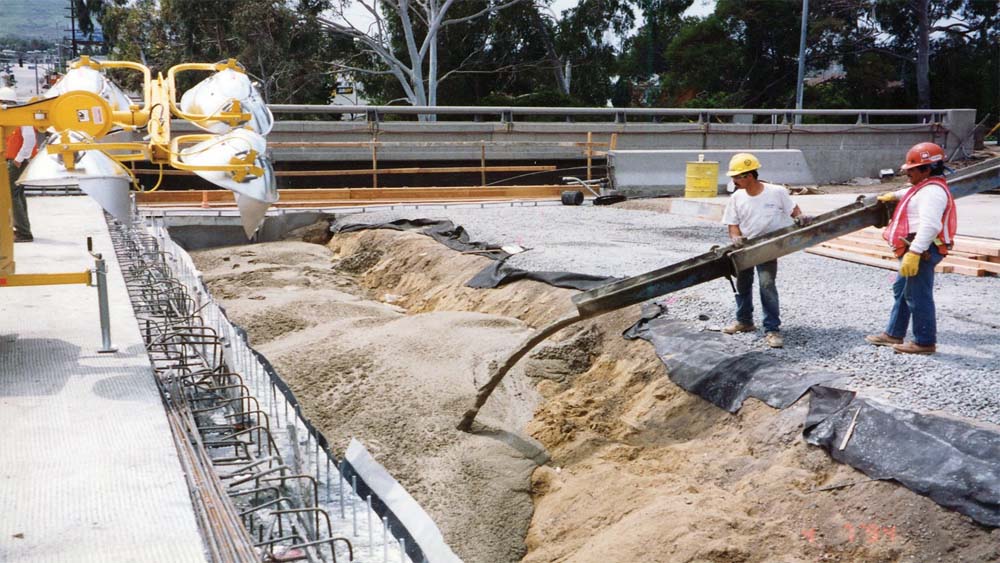
Step 2: Concrete Layering
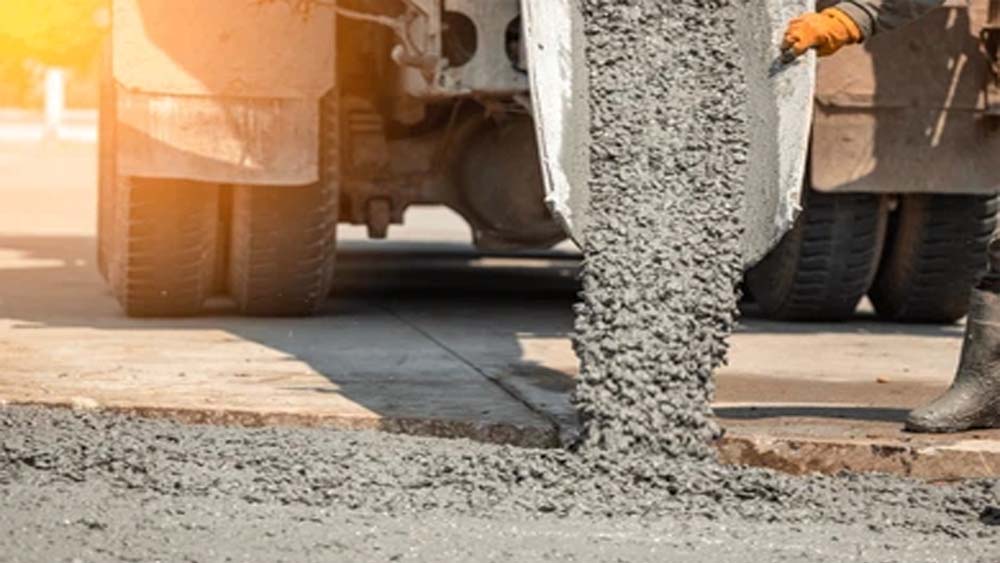
- High-strength industrial-grade concrete was poured in multiple layers to achieve the required thickness and load-bearing capacity.
- Each layer was carefully leveled and compacted to prevent air pockets and weak zones.
- Concrete mix was customized for compressive strength, durability, and workability, ensuring high-performance flooring suitable for industrial use.
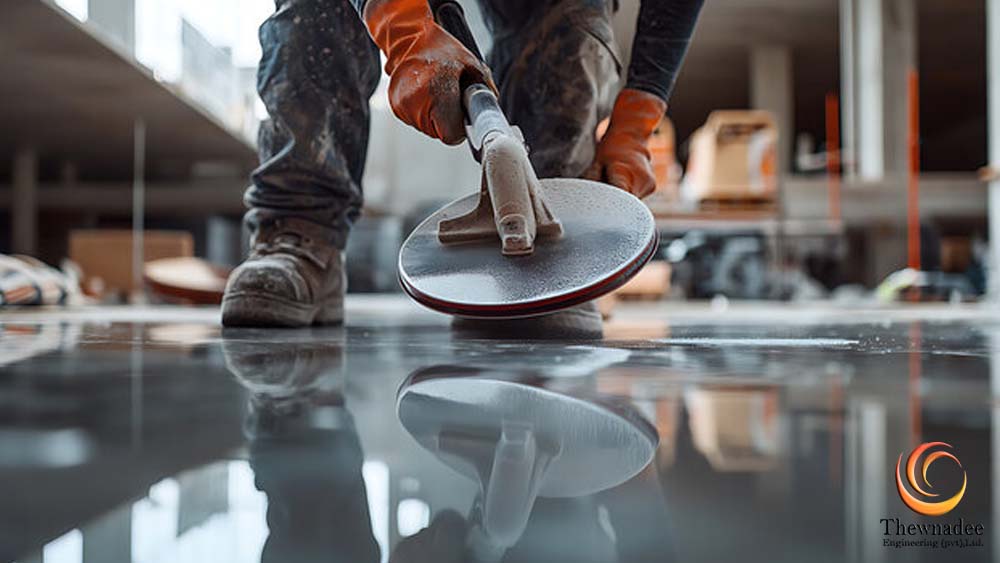
Step 3: Power Troweling
- After initial setting, the concrete was power-troweled using walk-behind and ride-on trowels.
- Multiple passes ensured:
- Uniform compaction and levelness
- Smooth, dense surface suitable for machinery and forklifts
- Removal of minor imperfections and surface irregularities
Step 4: Chemical Hardening
- A concrete densifier was applied to improve surface hardness, dust control, and longevity.
- This step enhanced abrasion resistance and prepared the floor for future operational demands.
Step 5: Curing and Quality Checks
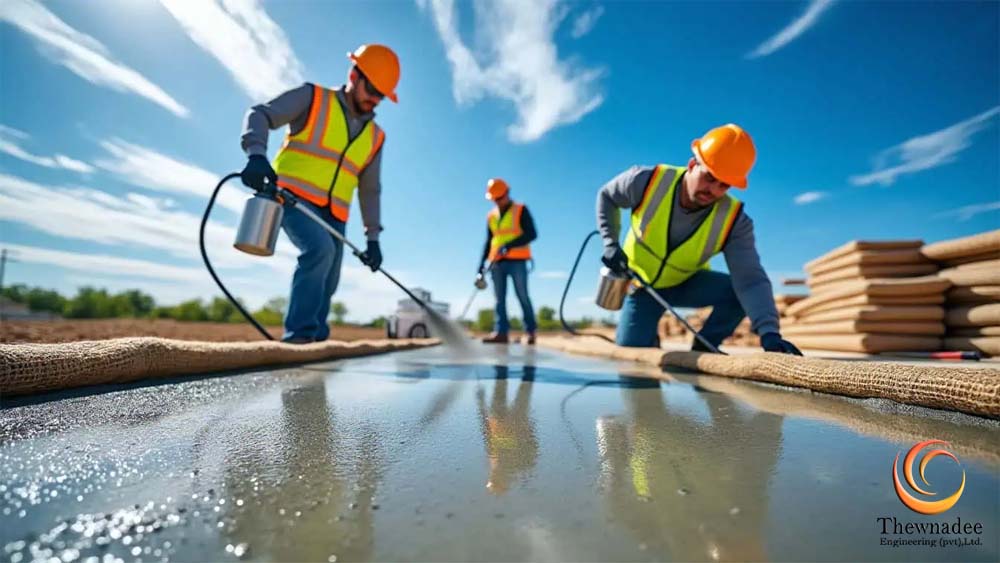
- Concrete was cured using protective covers and moisture-retaining techniques to prevent shrinkage cracks.
- Quality inspections ensured levelness, surface smoothness, and load-bearing performance.
Materials and Techniques Used
- Industrial-Grade Concrete: Customized for compressive strength and durability
- Power Trowels: Walk-behind and ride-on trowels for surface finishing
- Concrete Densifiers: Chemical hardening compounds for dust reduction and surface strengthening
- Surface Profiling Tools: Grinders and leveling devices for substrate preparation
- Curing Materials: Moisture-retaining covers and compounds to prevent shrinkage cracks
Project Outcome
The factory expansion flooring was completed successfully, delivering high-performance concrete floors that met all client requirements.
Key Achievements:
- High-Strength and Durable Floors
- Concrete layering and densification produced load-bearing floors capable of supporting heavy machinery and storage racks without deformation or cracking.
- Smooth and Level Surface
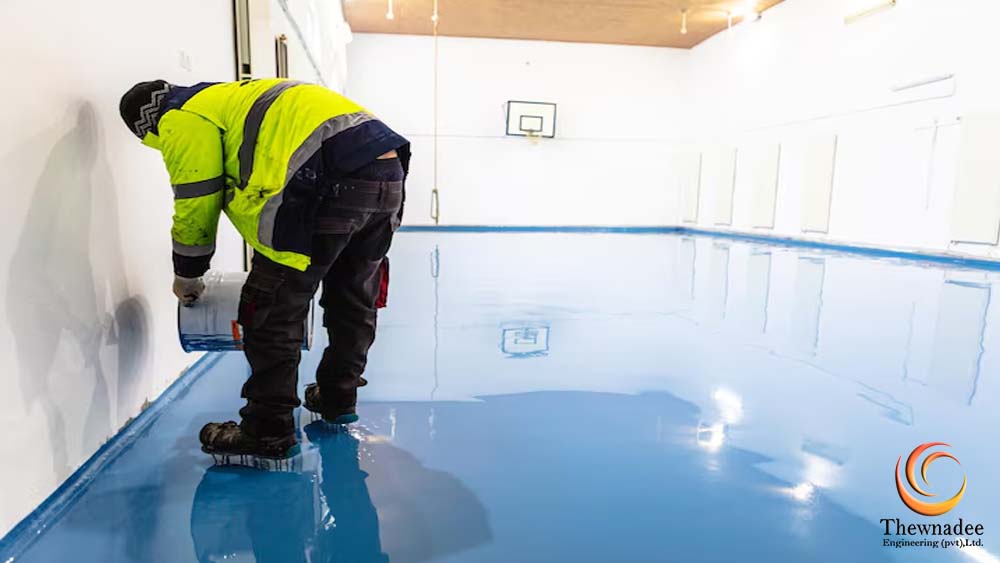
- Power troweling ensured a uniform, dust-free surface, reducing wear on forklifts and operational equipment.
- Operational Efficiency
- Seamless integration with existing floors allowed smooth transition for machinery and personnel, improving overall workflow.
- Durability and Low Maintenance
- Chemical hardening minimized dusting and surface degradation, reducing maintenance costs.
- Safety and Worker Comfort
- Smooth, leveled floors reduced tripping hazards and improved safety for personnel operating forklifts or handling trolleys.
- Timely Project Completion
- The project was completed on schedule, minimizing downtime and allowing the factory expansion to be operational promptly.
Client Feedback
The client expressed high satisfaction with the project, highlighting:
- The strength and durability of the new factory floor
- Smooth, level surfaces that improved operational efficiency
- The professional execution and timely completion by Thewnadee Engineering
- Reduced long-term maintenance and operational costs
- Overall improvement in workflow and equipment performance
Conclusion
This factory expansion project demonstrates the importance of professional concrete layering combined with power troweling in industrial flooring applications. By implementing:
- High-strength concrete layering for structural integrity
- Precision power troweling for smoothness and levelness
- Chemical hardening to increase surface durability and dust resistance
- Quality assurance and curing for long-term performance
Thewnadee Engineering delivered a robust, durable, and operationally efficient flooring solution, ensuring the factory expansion can withstand heavy machinery, high traffic, and long-term industrial use.
Industrial concrete floors designed with professional layering and troweling techniques provide enhanced durability, safety, and cost-effectiveness, making them essential for modern manufacturing and processing facilities.