

Introduction
Industrial floors must endure heavy machinery, forklift traffic, chemical exposure, and daily operational wear. Achieving a smooth, durable, and level concrete surface is essential for operational efficiency, safety, and longevity. Power troweling is one of the most effective methods for finishing concrete slabs, providing strength, aesthetics, and long-lasting performance.
This article explores power troweling, its techniques, benefits, best practices, and industrial applications, emphasizing why professional intervention is crucial for optimal results.
What is Power Troweling?
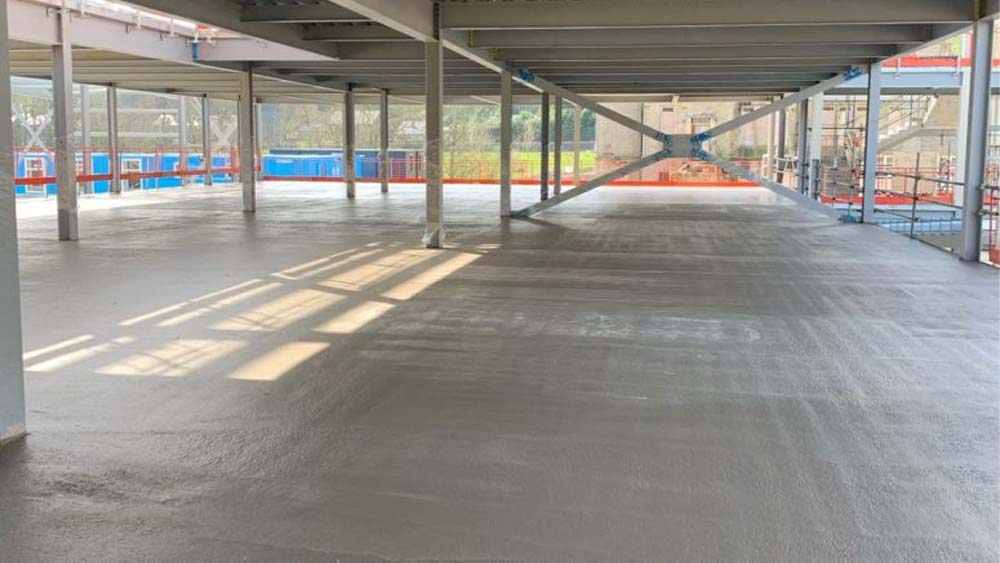
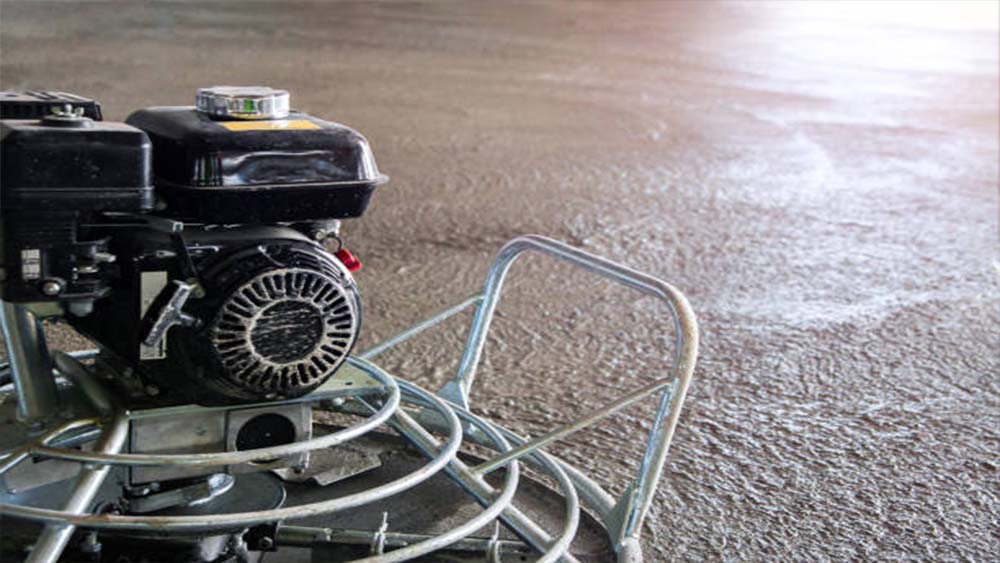
Power troweling is a mechanical concrete finishing process that uses rotating blades to smooth and compact freshly poured concrete. Unlike manual finishing methods, power troweling delivers a uniform, level, and highly durable surface efficiently, making it ideal for large industrial, commercial, and high-traffic floors.
Types of Power Trowels
- Walk-Behind Trowels
- Suitable for medium-sized slabs
- Operators guide the trowel manually for precision control
- Ride-On Trowels
- Ideal for large industrial floors
- Operator sits on the machine, improving speed and coverage
- Float Trowels
- Used for initial surface smoothing before final finishing
- Reduces minor surface imperfections
Benefits of Power Troweling
1. Smooth and Level Surfaces
- Produces uniform, flat, and polished surfaces
- Ideal for industrial floors requiring forklift and machinery operations
- Reduces uneven surfaces and tripping hazards
2. Enhanced Concrete Strength
- Compacts concrete, removing air pockets and voids
- Improves surface density, increasing load-bearing capacity
3. Reduced Surface Defects
- Minimizes cracks, dusting, scaling, and surface roughness
- Creates a durable base for epoxy coatings, terrazzo, or other floor finishes
4. Increased Efficiency
- Faster than manual finishing methods
- Covers large areas quickly, saving time and labor costs
5. Improved Aesthetic Appeal
- Creates a smooth, reflective finish
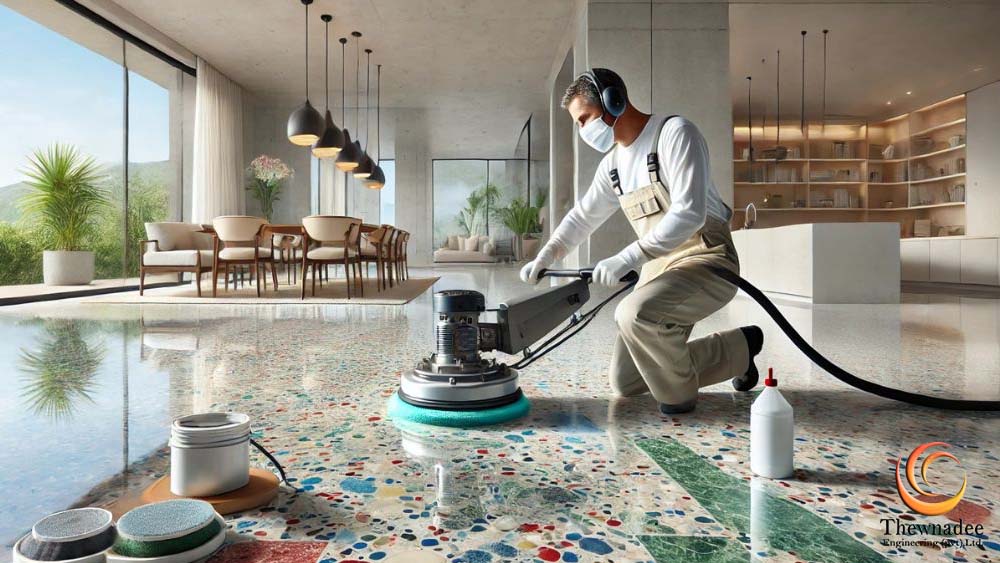
- Prepares the floor for additional treatments such as polishing or coatings
Techniques for Effective Power Troweling
1. Timing and Curing
- Begin troweling when concrete has reached initial set—firm but still workable
- Delaying or rushing can lead to surface imperfections or weak finishing
2. Correct Blade Selection
- Use float blades for initial passes
- Switch to steel blades for final finish to achieve smooth, dense surfaces
3. Progressive Passes
- Conduct multiple passes, starting with light pressure and increasing gradually
- Ensures uniform compaction and leveling without damaging the slab
4. Edge and Corner Treatment
- Use hand trowels or smaller trowels for edges and tight spaces
- Maintain consistency between edges and central slab areas
5. Moisture and Temperature Management
- Concrete must be cured properly to prevent shrinkage cracks
- Apply curing compounds or protective sheets to maintain optimal moisture levels
Best Practices for Industrial Floors
- Professional Assessment
- Evaluate slab thickness, concrete mix, and environmental conditions
- Adjust troweling technique accordingly
- Equipment Maintenance
- Ensure blades, motors, and engines are in top condition
- Prevent mechanical failures during large-scale projects
- Operator Training
- Skilled operators achieve uniform compaction, smoothness, and finish quality
- Reduces errors and surface defects
- Follow-Up Treatments
- Apply chemical hardeners, sealers, or epoxy coatings as needed
- Enhances durability, chemical resistance, and aesthetics
- Quality Assurance
- Inspect floor flatness, density, and surface uniformity
- Correct minor imperfections immediately to prevent long-term issues
Industrial Applications of Power Troweling
- Warehouses: Smooth floors for forklifts, storage racks, and pallet movement
- Factories: Dense, durable surfaces capable of supporting heavy machinery
- Commercial Buildings: Polished, uniform floors for showrooms or office spaces
- Parking Areas: Flat, even surfaces for vehicle movement and drainage
- Food and Pharmaceutical Facilities: Base for hygienic, dust-free floors
Case Example: Industrial Manufacturing Plant
A large manufacturing facility in Sri Lanka required smooth, durable, and level floors to support heavy machinery and forklifts. The professional solution involved:
- Assessing slab thickness and concrete mix
- Initial troweling with float blades for surface leveling
- Multiple passes using steel blades to achieve dense, reflective finish
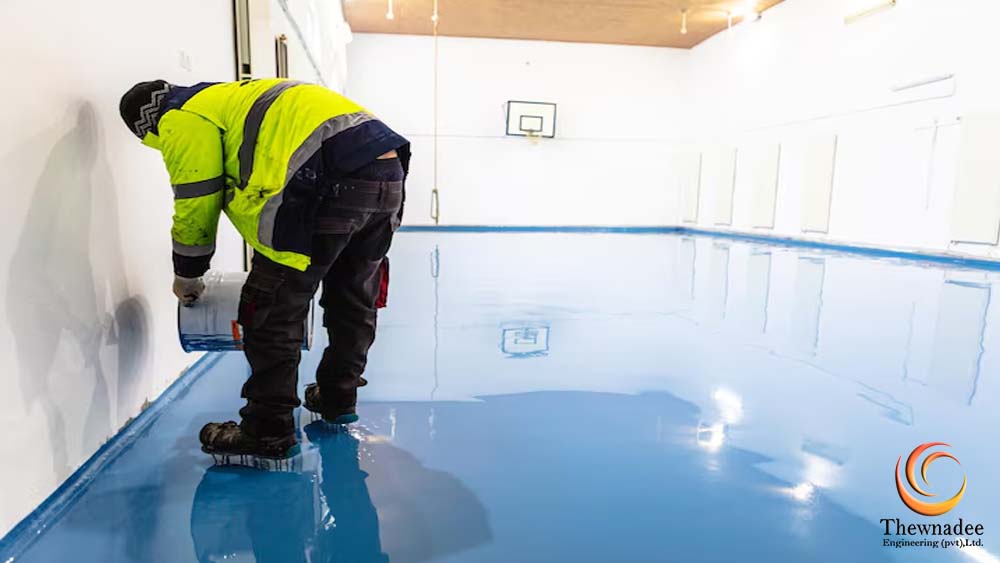
- Application of chemical hardeners and epoxy coatings for durability
Result: high-strength, dust-free floors capable of withstanding heavy industrial traffic, chemical exposure, and long-term operational stress.
Advantages of Professional Power Troweling
- Uniformity: Smooth and level surfaces across large slabs
- Durability: Compacted concrete reduces air pockets and weak zones
- Time Efficiency: Faster installation compared to manual methods
- Cost Savings: Reduces future repair, maintenance, and resurfacing costs
- Aesthetic Quality: Reflective, professional-grade finish suitable for additional flooring treatments
Conclusion
Power troweling is a critical process in industrial and commercial floor construction, ensuring smooth, durable, and safe surfaces. By combining professional techniques, proper equipment, and follow-up treatments, industrial floors can withstand heavy loads, chemical exposure, and high traffic, while maintaining aesthetics and functionality.
Professional companies like Thewnadee Engineering (Pvt) Ltd provide expert power troweling services, ensuring floors are:
- Level, smooth, and structurally sound
- Optimized for coatings, polishing, or epoxy finishes
- Low-maintenance and long-lasting
Investing in professional power troweling is a strategic decision to enhance operational efficiency, safety, and the lifespan of industrial floors.